 Summit Evidence
 AI Needs an Architect: Building Trust Into Healthcare Workflows
Audio coming soon.
A collection of AI pilots does not automatically become a transformation strategy. Someone has to connect the objective, the workflow, the controls, and the evidence that the investment is working.
That was a central theme in my conversation with Gary Berman, host of the Cyber Hero Adventure Show. This short executive edit brings together the parts most relevant to leaders moving AI into healthcare operations: how to make probabilistic systems useful, how to build confidence in their behavior, and who owns the process around them.
I use a simple thought experiment in the conversation: imagine trying to reach the moon by funding ten unrelated activities and hoping they eventually add up to a mission. An objective matters because it gives each investment a purpose and each result a way to be evaluated.
Healthcare AI needs that same discipline. It needs an architect.
AI Needs an Architect: Building Trust Into Healthcare Workflows
A prediction needs a defined response
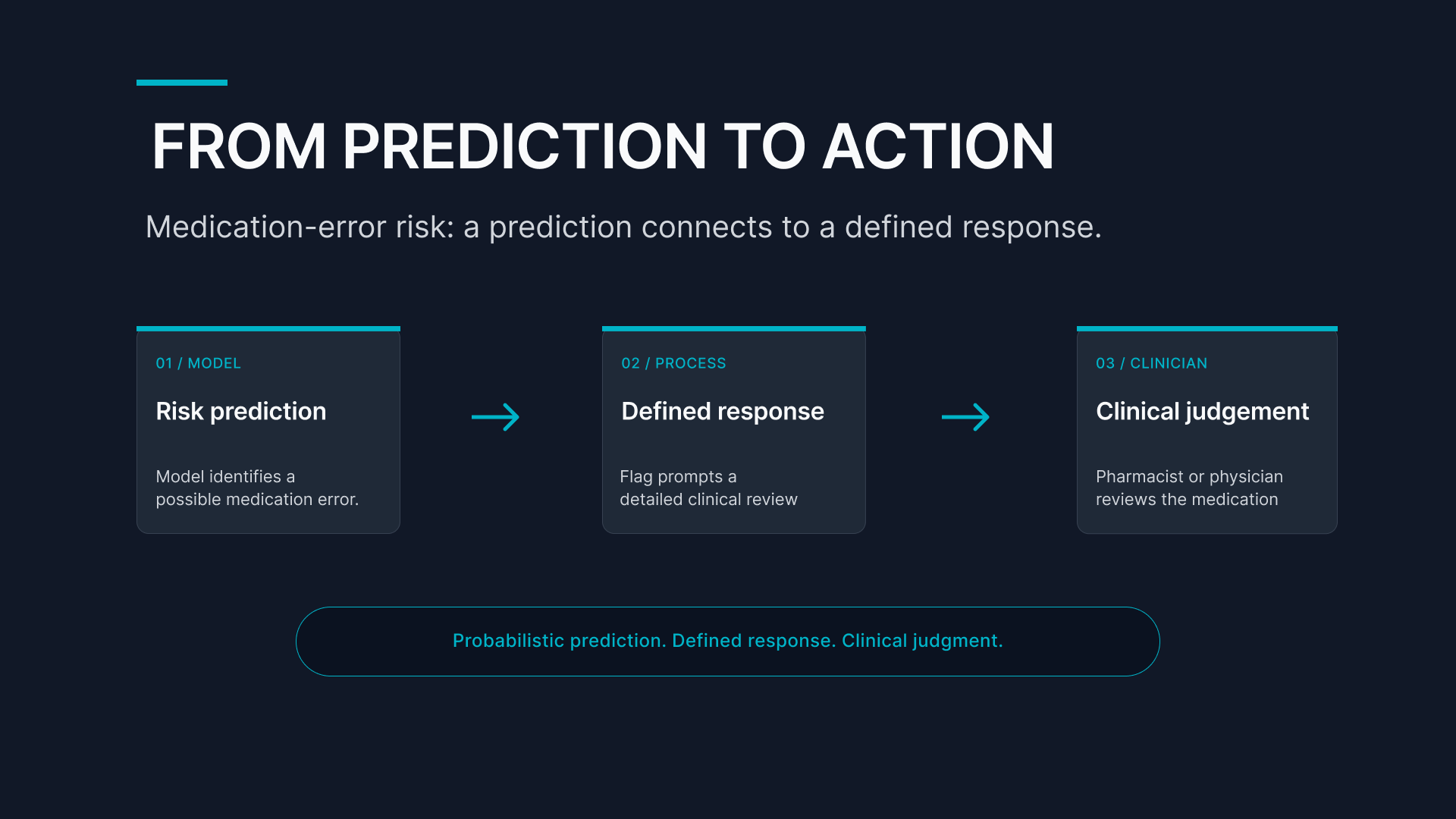
In the conversation, I describe models I built for use in hospitals that could flag potential outcomes like a medication error. The prediction mattered because it connected to a response: a pharmacist or physician would review the medication regimen and determine what to do next.
The model estimated risk. The workflow established how that information reached someone who could act on it. Clinical judgment remained part of the process.
That distinction is central to how I think about AI implementation. A probabilistic output can sit inside a defined operational process. We can specify who receives a flag, what review follows, and who is accountable for the next decision without pretending the underlying prediction is certain.
Build confidence at steps you can inspect
My background in physics shaped how I approach this problem. When the underlying system is probabilistic, confidence depends on evidence: breaking a difficult question into parts we can examine and understanding what each result does, and does not, tell us.
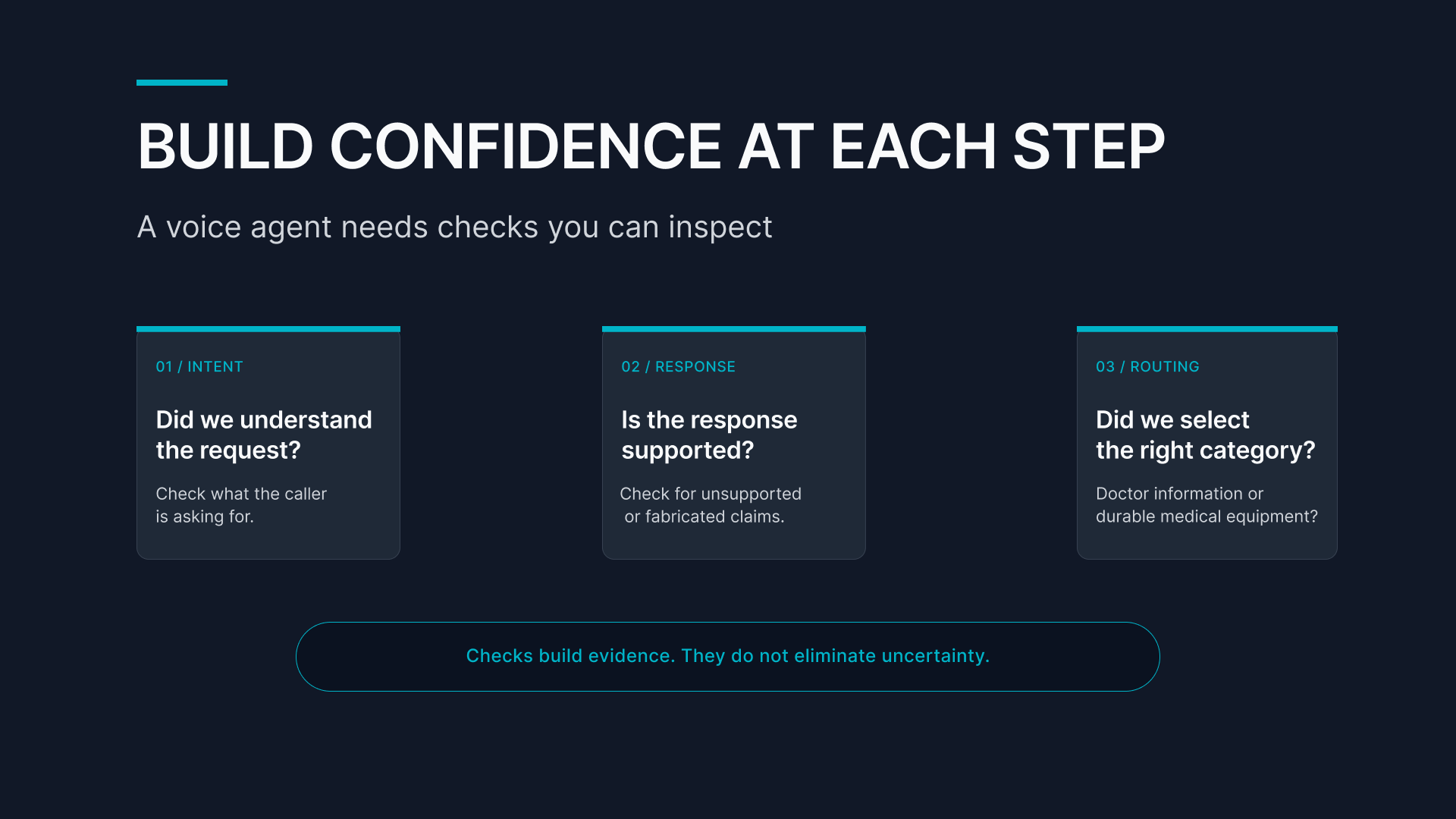
A voice agent provides a practical example. A fluent conversation can conceal several different decisions:
- Intent: Did the system understand what the person was asking?
- Response: Is the answer supported by the information available to the system?
- Routing: Did the request reach the right category or destination?
Someone asking about a doctor and someone asking about durable medical equipment may need different paths through the organization. Understanding the words is only one part of completing the task.
These checkpoints give teams specific behavior to evaluate. They also make failures easier to investigate: did the agent misunderstand the request, generate an unsupported response, or send it down the wrong path?
A checker can still be wrong. Passing individual checks does not establish that the whole workflow is reliable. Teams need evidence from the complete process, including what happens when the system encounters uncertainty or fails.
Trust requires visibility after deployment
When Gary asks what comes next for healthcare, my answer centers on trust architecture: how organizations govern these systems and make their behavior visible.
Defined workflows and evaluation checkpoints are a foundation. In operation, leaders also need to know what the system is doing, where it is failing, and how the organization will respond. That requires monitoring, a record of relevant decisions, and people with authority to intervene.
This connects to the argument I made in Beyond Human-in-the-Loop: Decision Telemetry for Non-Human Entities: as agents move across tasks, organizations need visibility into the decisions connecting those tasks.
Trust has to be supported by evidence that the operating team can inspect and use.
Four questions before the next AI investment
The conversation leaves me with four questions I would put in front of an executive team:
- What outcome are we trying to change? Name the operational result and how it will be measured.
- What happens after the model responds? Identify the action, the review, and the person responsible.
- What evidence will show that the workflow is working? Evaluate the steps and the complete process, including failure cases.
- Who can change course? Establish who can investigate, intervene, pause the workflow, or revise the approach.
Answering those questions makes an AI investment easier to evaluate and manage. It also makes the gaps visible before the organization scales them.
That is what I mean by AI needing an architect: someone accountable for connecting the objective to the operating reality, with enough evidence to decide what should happen next.
The full conversation
My thanks to Gary Berman for the conversation and for bringing these questions to the Cyber Hero Adventure Show.